

July reading recommendations
(Part One)

Happy Monday,
I’m writing this from a rainy weekend in Wanaka, New Zealand. After a slow morning wandering through the local bookshop, we’re now spending the day reading, eating, drinking wine, and enjoying a rare chance to slow down.
I’ve been meaning to sit down and share some thoughts on the books I’ve read lately, so today feels like the perfect opportunity. Here are a few recent reads — some I loved, some I had more complicated feelings about.
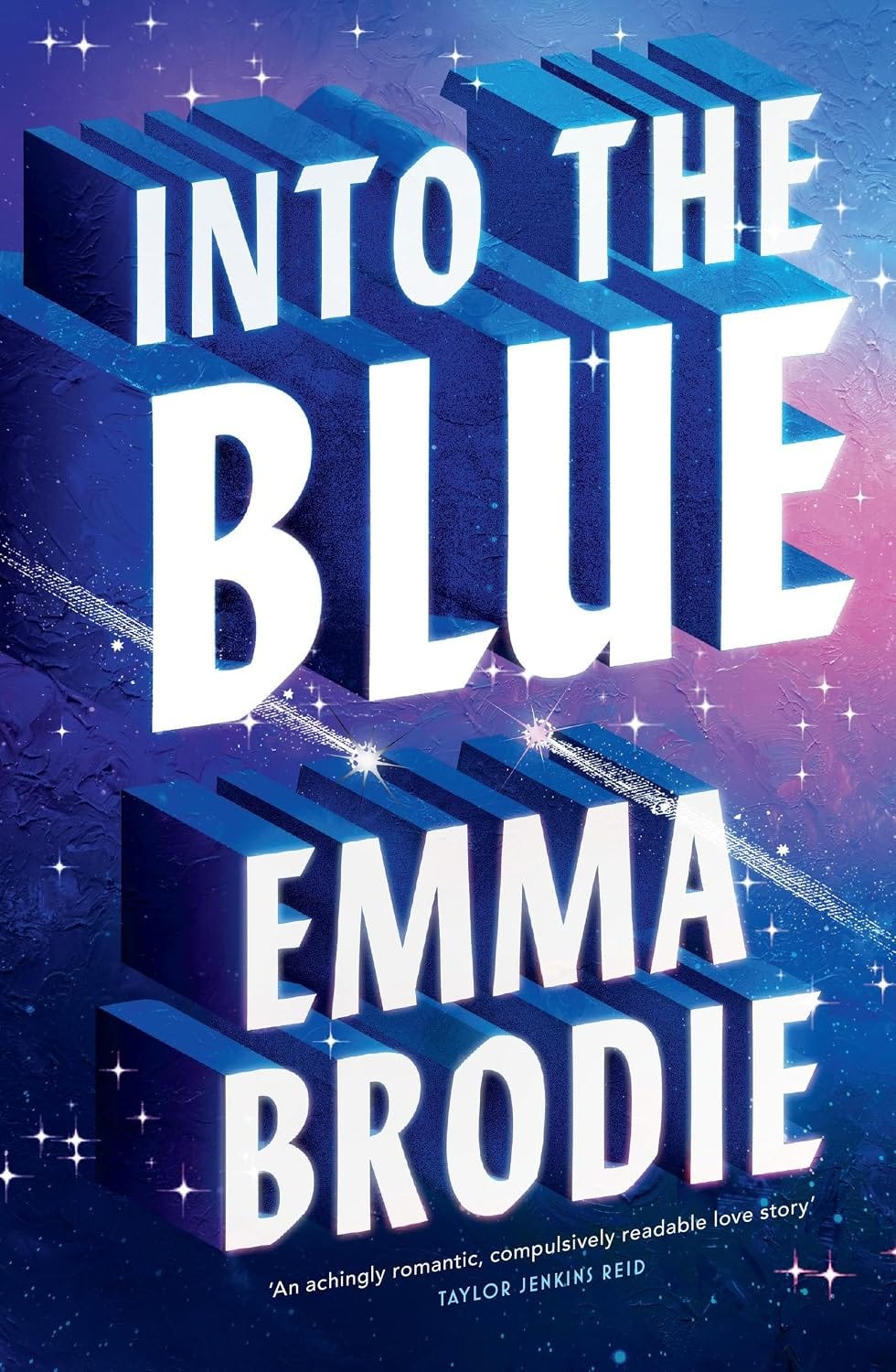
Into the Blue by Emma Brodie (2026)
Into the Blue is less a romance than a sweeping love story, and reminded me of Tomorrow, and Tomorrow, and Tomorrow – not because of plot, but because both explore how ambition, timing and love shape a life. AJ is 17 and finishing her junior year of high school, while Noah is 21. They meet in the summer of 2000 while working at a video store in Massachusetts. Their friendship becomes the defining relationship of their lives, and their lives remain inextricably intertwined across decades.
After Noah suddenly disappears, AJ is forced to reckon with his absence and what it means for their relationship. Moving between different eras of their relationship, the novel allows its characters to grow, falter and evolve, making their connection feel even more authentic.
Set against the backdrop of Hollywood and improv theatre, Into the Blue creates a vivid, convincing universe that feels immersive without overshadowing the characters. The central mystery surrounding Noah’s disappearance adds genuine momentum, raising the stakes and making the novel difficult to put down. I tore through it in just a couple of days; it’s an engrossing, compulsively readable story that handles its ambitious scope with ease.
That being said, I didn’t connect with the improv training they take in their youth, nor the sci-fi television series Into the Blue that later brings them back together, and found myself skimming these sections. While these scenes were important to the story (they’re clearly a metaphor for their relationship), they didn’t capture my interest in the same way as the relationship itself.
The novel’s greatest strength lies in its characters. I appreciated that the protagonist refuses to excuse Noah’s flaws, instead holding him accountable for the hurt he causes. Their relationship is messy and emotionally complex, though at times I found Noah’s mindset frustrating, and the repeated cycles of miscommunication occasionally pushed the relationship into unnecessarily toxic territory. Likewise, some of the later sections felt repetitive, revisiting familiar cycles of uncertainty that slightly diluted the emotional impact.
Even so, Into the Blue is compelling and emotionally rich; it hooked me and carried me through.
*
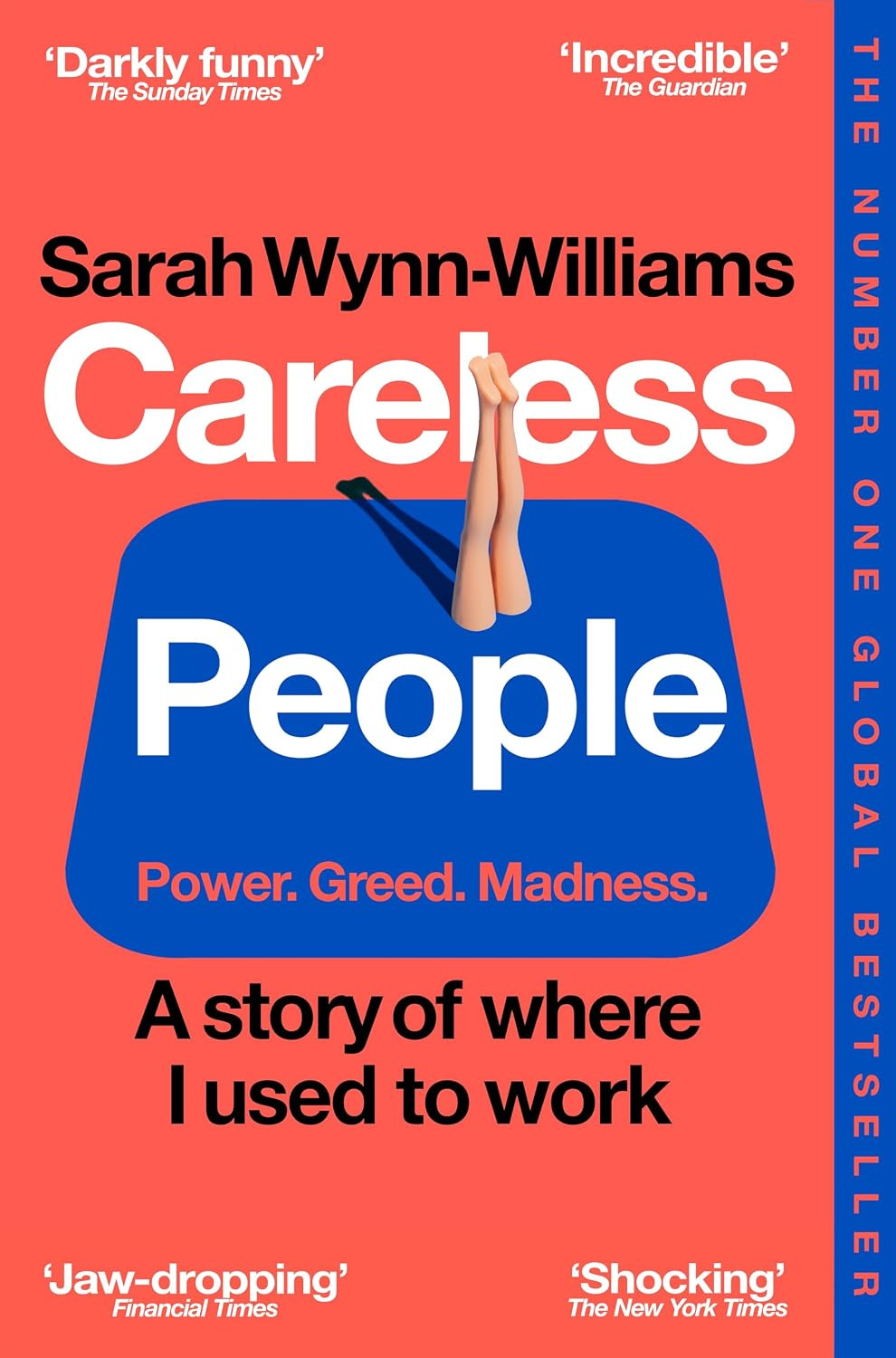
Careless People by Sarah Wynn-Williams (2025)
Sarah Wynn-Williams’ Careless People promises an insider’s account of life at Facebook during one of the company’s most consequential periods, and in many ways it delivers. Covering her time leading global policy between 2011 and 2017, the book offers a fascinating glimpse inside one of the world’s most influential companies as it grapples with explosive growth, political power and an increasingly complex global presence. It’s quite engrossing, full of dark humour and extraordinary anecdotes.
The title, borrowed from The Great Gatsby, is fitting. Throughout the book, Wynn-Williams paints a portrait of immensely powerful people whose carelessness has consequences on a global scale. Mark Zuckerberg emerges as an unsettling figure: thin-skinned, stubborn, resistant to collaboration and, in Wynn-Williams’ telling, willing to bend the truth when it suits him. As the memoir progresses, the revelations become increasingly alarming. Wynn-Williams recounts episodes of sexual harassment, describes employees being encouraged to accept imprisonment in foreign countries to advance their careers, recounts being criticised in a performance review while recovering from a coma, and raises troubling questions about Facebook’s congressional testimony and its willingness to share user data with the Chinese government. Some of these stories have been reported before, but they make for compelling reading.
Yet for all its strengths, Careless People never quite became the memoir I was hoping for.
The opening chapter is superb. Wynn-Williams recalls being attacked by a shark while growing up in New Zealand, immediately establishing a distinctive narrative voice and suggesting a deeply personal story lies ahead. Instead, that intimacy quickly gives way to a rapid-fire chronology of meetings, policy decisions and corporate crises. Rather than inhabiting moments, the book often recounts them, and at times it reads more like a history of Facebook than an exploration of Wynn-Williams’ own life.
That distance also shapes the book’s biggest weakness. Wynn-Williams comes across as intelligent, capable and deeply credible, but I struggled with the lack of self-examination. She expresses shock at many of Facebook’s most disturbing behaviours, yet rarely interrogates her own role within the organisation or the compromises required to remain there for six years. I kept waiting for a more searching reflection on why she stayed, what ambitions or beliefs kept her invested, and how her thinking evolved over time. Those questions remain largely unanswered, making her emotional journey feel less complete than the corporate story surrounding it.
Even so, Careless People is difficult to put down. As an insider account of Facebook’s rise, it offers a rare glimpse behind one of the world’s most powerful companies. I just wished it had trusted the memoir as much as it trusted the exposé. The result is a book that excels at documenting one of the most powerful companies in the world but leaves its most interesting character—the woman telling the story—slightly out of focus.
*
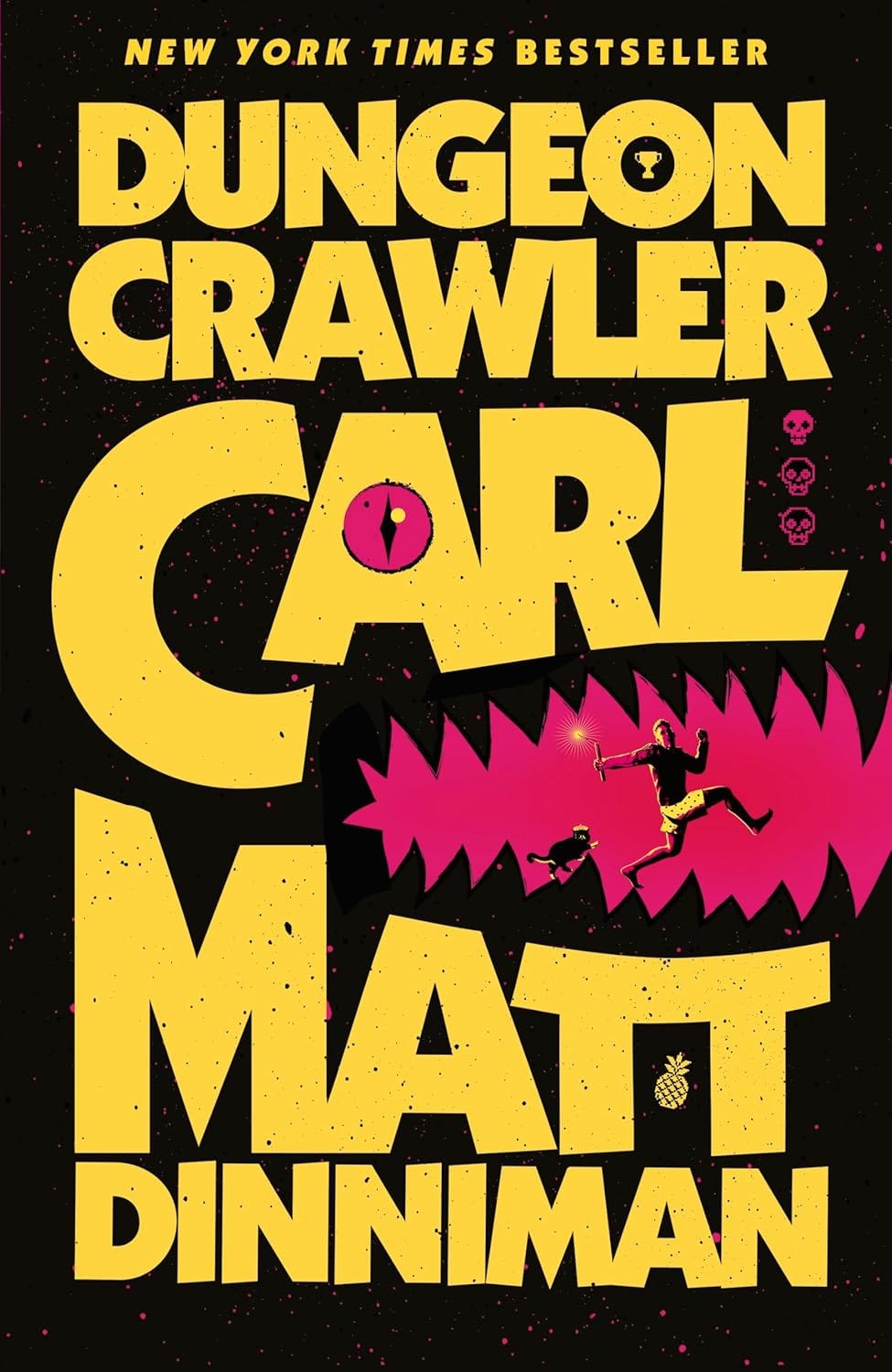
Dungeon Crawler Carl by Matt Dinniman (2020)
I went into Dungeon Crawler Carl expecting something silly – and it absolutely is – but I didn’t expect to find myself so invested. The premise is completely bonkers: when Earth is destroyed and its survivors are forced into a brutal, televised alien game show, Carl finds himself fighting for survival in nothing but his underwear alongside his ex-girlfriend’s talking cat, Princess Donut. It’s a wildly addictive blend of The Hunger Games, Dungeons & Dragons and The Hitchhiker’s Guide to the Galaxy, combining action, humour and absurdity into something that makes its absurd premise work.
The novel is part of the LitRPG genre, which blends traditional storytelling with the mechanics of video games and tabletop role-playing games. That description alone might not sound like it would work for everyone, but Dinniman makes the format incredibly accessible. The levels, quests and battles create the structure of the story, while the characters and world-building give it its heart.
The biggest strength of Dungeon Crawler Carl is its characterisation. Carl is an unlikely hero: reluctant, self-deprecating and constantly thrown into situations he never asked for. Yet he’s exactly the kind of person you want to follow. He’s decent, practical and genuinely cares about doing the right thing, even when the world around him has become horrifying. Princess Donut is an unexpected highlight – hilarious, dramatic and completely ridiculous – but she also provides an important emotional anchor. Their relationship gives Carl someone to protect and fight alongside, making the stakes feel more personal.
The world-building is where the novel really elevates. Dinniman creates a universe that is clever, strange and endlessly imaginative, balancing the brutality of the dungeon with a lighthearted tone. The humour is a huge part of what makes the book work; the self-awareness and absurdity stop the constant violence and death from becoming overwhelming. It’s a dark premise, but the book never loses its sense of fun.
That said, the novel isn’t without its flaws. The opening is weighed down by exposition as the world and its rules are established, and I found the pacing slowed during some of the more repetitive dungeon levels and fights. At times, I also wanted more moments of Carl’s interiority to balance the action. Some battles felt surprisingly easy given the circumstances, but the strength of the characters and the sheer creativity of the world kept me happily going.
All things considered, Dungeon Crawler Carl is a strong setup for what promises to be a much bigger story. It’s clever, hilarious and completely unique. With a cliffhanger ending, I can see why this series has developed such a passionate following, and I wouldn’t be surprised to see it make the jump to television or film one day.
*
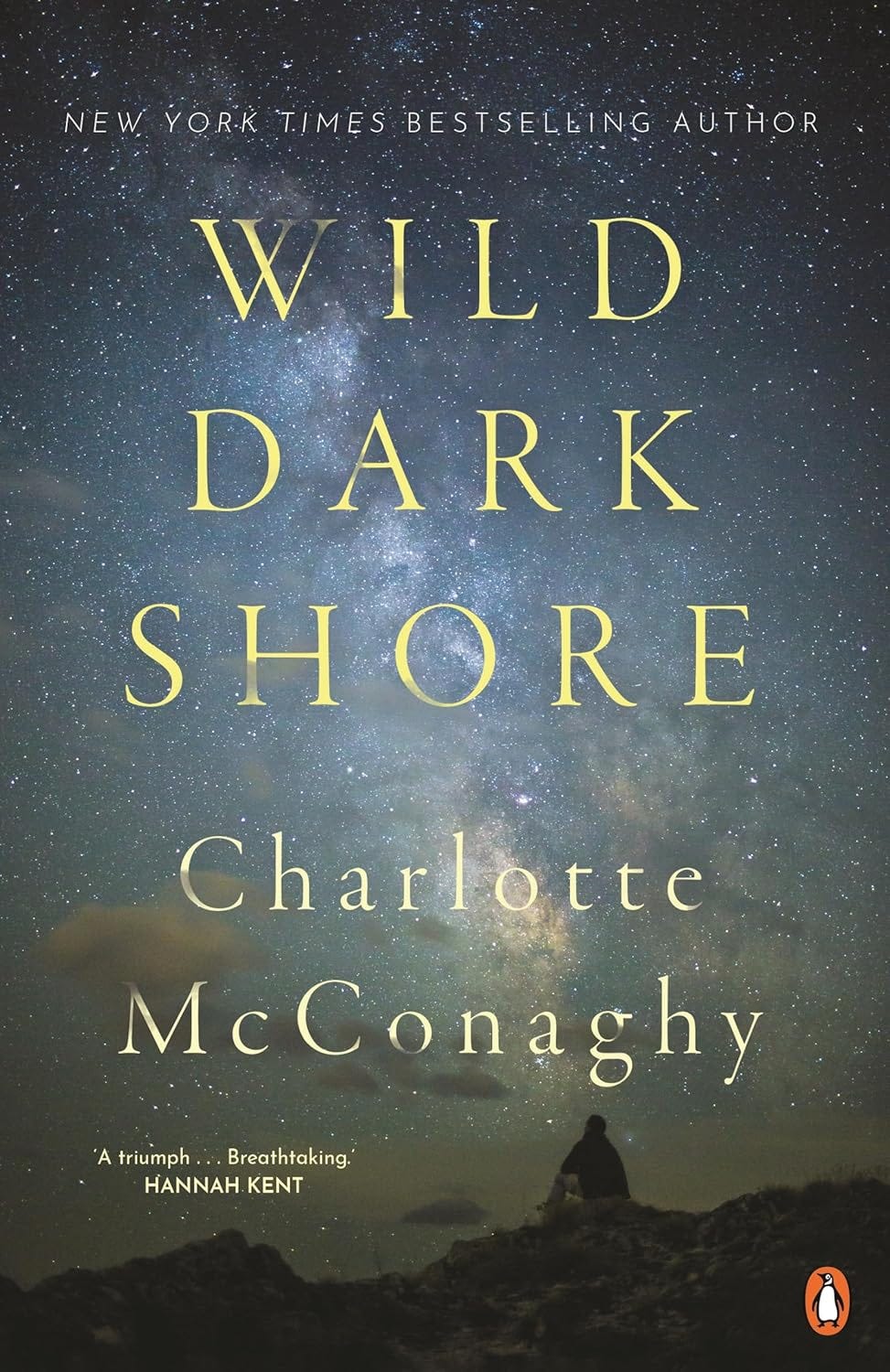
Wild Dark Shore by Charlotte McConaghy (2025)
I loved Wild Dark Shore. Truly, I could probably leave my review at that and it would capture my feelings. But this is a book worth talking about, because it is stunning.
Set on a remote, sinking sub-Antarctic research island, Wild Dark Shore is an atmospheric climate-fiction thriller about an isolated family guarding a global seed bank when a mysterious woman named Rowan washes ashore. Dom Salt and his three children have spent years living at the edge of the world, cut off from society and responsible for preserving the seeds that may one day help rebuild a changing planet. When Rowan arrives, she brings with her questions, secrets and a past that slowly begins to collide with the Salt family’s present.
From the beginning, the setting is impossible to ignore. The island of Shearwater feels less like a backdrop and more like a character itself – wild, beautiful and increasingly fragile. McConaghy’s descriptions capture both the brutality and the wonder of a landscape that feels simultaneously ancient and under threat. There is a deep sense of grief running through the novel: a recognition of the natural beauty we are losing as climate change reshapes the world around us.
But for all its focus on nature, Wild Dark Shore is ultimately a story about people. The arrival of Rowan disrupts the fragile balance of the Salt family, but it also creates unexpected connections. The children quickly embrace her, and despite her distrust of Dom, Rowan finds herself drawn into their world. As relationships deepen and the mysteries surrounding each character begin to unfold, the novel becomes a meditation on trust, survival and the complicated ways humans seek connection.
The suspense is beautifully handled. Four family members and one stranger are stranded on an isolated island with no way to communicate with the outside world – a situation that feels full of possibility and danger. McConaghy slowly reveals hidden motivations and histories through short, shifting chapters that move between perspectives and narrative styles. The result is a mystery that steadily pulls you forward while giving each character room to feel fully realised.
What makes Wild Dark Shore so memorable is the way McConaghy writes about both the natural world and human vulnerability with such tenderness. It is a story about a planet in crisis, but also about family, forgiveness and the small acts of care that keep us connected.
Beautifully written, atmospheric and deeply affecting, Wild Dark Shore is incredible.
*
Talk to you soon, for another roundup of reads!
Jess